Should You Choose the Award-Winning Agency or the One That Can Show You Results?
Mid Length
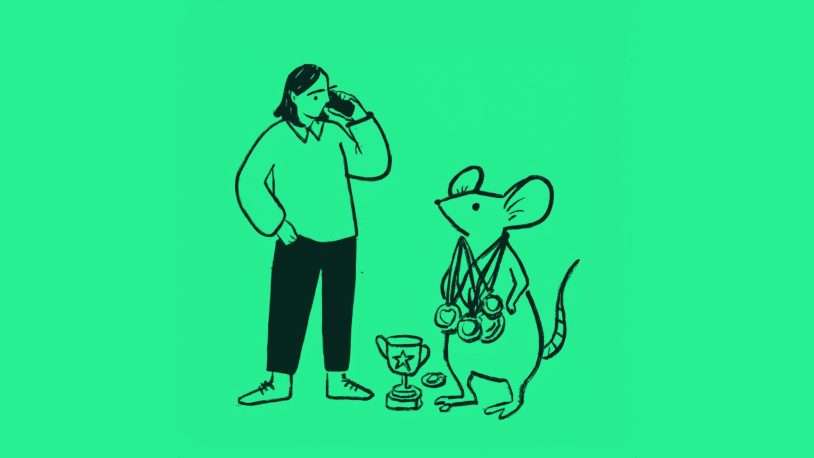

A friend of mine asked me a question recently that I’ve been thinking about ever since. He was deciding between two agencies.
One had a trophy cabinet that could take your eye out, shortlisted for everything, celebrated in the industry press, the kind of agency whose work you’d clock at a D&AD show and nudge your colleague about. The other? Quieter on the awards front, but with a client list that read like a business success story and results they could actually talk to. Conversion uplifts, revenue growth, market share gained a splattering of awards they occasionally entered.
He had a genuine appetite to do something creatively bold, something that would turn heads in his sector. But he also had a board to answer to and a growth target that wasn’t going to move itself. So he asked me, honestly and directly: is this an either/or decision? Do you have to sacrifice creative ambition to get real commercial results, or is that a false trade-off?
It’s a genuinely good question. And I want to give it a genuinely good answer, because I think a lot of people in his position are working from some assumptions that could lead them somewhere expensive.
The awards problem nobody talks about
I’ve worked with Steph Brown previously. She’s an agency awards expert and I learnt everything about awards from her. I can only hope I do a decent job of translating what I learned!
Here’s something worth knowing about the branding and design industry: awards are self-selecting. Agencies choose which work to enter, pay entry fees, and write the case studies. The best agencies I know, the ones doing serious work with serious outcomes for serious businesses, are often far too busy delivering that work to spend their time writing submission documents and in many cases, sexy time-intensive videos to support an entry. Many of them don’t enter at all – especially to the big well-known ones as the big agencies plough thousands into these and the mid to smaller agencies just can’t keep up.
That doesn’t mean award-winning work is bad, I’ve entered Nalla and myself personally into them in the past. It just means the trophy cabinet is not the reliable proxy for quality that it can appear to be from the outside. What it frequently reflects is an agency’s appetite for entering awards, their relationships within the judging community, and sometimes their ability to produce show-stopping creative that photographs beautifully in a case study but is harder to follow up with a conversation about ROI.
This isn’t cynicism. It’s just useful context when you’re in my friend’s position, weighing up who to trust with something that matters to your business.
Can the most award-winning branding work fail in real life?
The Tropicana redesign is probably the most talked-about example of a creative project that, should have been a success. It was considered by some designers as a piece of boundary-pushing work: minimalist, modern, the kind of clean aesthetic that was widely praised in design circles at the time (the era of every brief being ‘make us look like Apple!’) for its sophistication and clarity. PepsiCo spent a lot of money rolling it out. Within two months of launch, sales dropped by 20%. That’s roughly $30 million in lost revenue. The reason was that customers couldn’t find the product on shelves, as it looked so different! The packaging was quietly pulled and replaced with the original.

The interesting thing about the Tropicana story is that it wasn’t a case of the agency doing just bad design. By the internal metric of the creative industry, much of it was competent work. The problem was that nobody asked the right questions on the front end. Nobody properly investigated how much of Tropicana’s brand equity was tied up in the visual cues they were about to eliminate. The iconic orange-with-a-straw wasn’t just a nice illustration. It was the thing that told customers in two seconds which carton to grab. Strip that out and you strip out the shortcut that years of brand-building had created in people’s minds. You can produce the most boundary-pushing and award-worthy execution in the world and still completely miss the point.
In B2B, the versions of this story are typically quieter but no less costly. Mark Ritson, one of the sharpest brand strategists working today, put it well when he observed that most corporate rebrands fail not dramatically, but pointlessly.
The new logo goes up, the press release goes out, and then absolutely nothing changes. He specifically called out examples like KPMG positioning itself as a “digital leader” and Deloitte introducing a green dot and calling it a strategic transformation.
Work that perhaps generated interest in design circles, but added nothing meaningful to the business. The graveyard of professional services rebrands that ticked every creative box and moved no commercial needle is, as he put it, vast.
These are the examples worth sitting with if you’re being dazzled by a shortlist.
But safe isn’t the answer either
I wish to be careful here, because what I’ve said so far could be read as: play it safe, go functional, don’t bother with creativity. However, that would be equally wrong.
There’s a huge amount of B2B branding out there that is beige in the truest sense: unremarkable, indistinguishable from competitors, designed by committee to offend nobody and inspire no one. Work that is ‘on-brand’ in the narrowest possible sense and totally forgettable in practice. That kind of work doesn’t win awards, but its important to highlight that it also doesn’t work.
The real problem isn’t creativity versus results.
It’s creativity that isn’t based on a strategy, which is very different. When creative ambition is guided by a genuine strategic insight, when it starts with a clear understanding of what the brand needs to say, who needs to hear it, and why it matters to them, then the creative work becomes what makes the strategy land. It becomes the vehicle for the business outcome, not an end in itself.
That’s the distinction I’d ask any agency to be honest with you about. Not “are you creative?” but “does your creativity start with the business problem, or does it start with the aesthetic?”
How to ask the right questions when hiring an agency.
If you’re in my friend’s position, comparing agencies across this spectrum, here are the things I’d push for in any pitch conversation.
Ask them to walk you through a piece of work from the brief to the end – if they don’t conclude with an outcome, let this be a red flag. Be focused on not the concept or rationale for the typeface choices! But what happened in the business as a result? If they can’t tell you, or if they deflect to what the work looked like rather than what it did, that’s something you might want to reflect on.
Ask them what research or insight anchored the creative direction. Great creative work in branding isn’t born in a vacuum. It comes from understanding the audience, the competitive landscape, the brand’s actual differentiators, and the specific behaviour change you’re trying to create. If the answer is vague, that’s another thing to just mull over.
Ask them about work that didn’t go entirely to plan, and what they learned. This is less about the answer and more about the posture. An agency that’s honest about where things got complicated and how they addressed it is almost always more trustworthy than one whose case studies are uniformly triumphant.
And yes, if they have awards, ask them what they’re for. Some awards, like the DBA Design Effectiveness Awards, specifically require entrants to demonstrate measurable business impact through evidence. Winning those is a meaningfully different thing from winning a purely aesthetic category. It’s worth knowing which is which.
The honest answer to my friend’s question
It isn’t either/or. The framing of “bold creative agency” versus “results-focused agency” is a false binary, and any agency presenting itself as having to choose between the two should probably tell you something.
The best branding work is creative because creativity makes it memorable, distinctive, and emotionally powerful. And it produces results because it was never only about looking good. It was about changing something: a perception, a behaviour, a market position.
What I would say if pushed is this: if you have to choose, choose results. Not because creative excellence doesn’t matter (I’m a designer, I live and breathe creativity), but because results are the test of whether the creative excellence is a solution to a commercial problem. A brand that looks beautiful in a case study but hasn’t shifted your pipeline, improved your ability to attract the right clients, or given your team a clearer story to tell hasn’t done its job, no matter how many judging panels it impressed.
And given that a huge number of the agencies doing genuinely effective work don’t enter awards at all, because they’re too busy doing the work, the trophy count is probably the least useful thing to weigh in that decision.
Ask for the evidence and what changed.
Ask what the business looks like now versus before.
Those are the questions that will tell you who to trust.
FAQ
Design awards vs business results: Your Questions Answered
We’ve gathered the most common questions people ask about this topic and answered them clearly and simply below. Hopefully you’ll find exactly what you’re looking for.
Do design awards mean a branding agency will get better results for my business?
Not necessarily. Design awards are self-selecting: agencies choose which work to enter, write the case studies, and pay the entry fees. Many of the agencies doing the most impactful commercial work simply don’t enter, because they’re too busy delivering results for clients. An impressive shortlist says a lot about an agency’s appetite for entering awards and its creative reputation within the industry. It says comparatively little about whether the work moved the needle for the businesses behind it.
What is the difference between creative awards and effectiveness awards in branding?
Creative awards, such as D&AD, Cannes Lions, and Clio, typically assess the quality and originality of the creative work itself: its craft, concept, and execution. Effectiveness awards, such as the DBA Design Effectiveness Awards, require entrants to demonstrate measurable commercial outcomes through evidence, including revenue growth, conversion improvements, or market share gained. If an agency’s trophy cabinet is built on the latter, that’s a meaningfully different credential to the former. It’s worth asking which you’re looking at.
Why do so many B2B rebrands fail to deliver commercial results?
As brand strategist Mark Ritson has observed, most corporate rebrands fail not dramatically, but pointlessly. The new logo goes up, the press release goes out, and then nothing changes. This happens when a rebrand is treated as a cosmetic exercise rather than a strategic one: when it starts with the aesthetic rather than the business problem. In B2B, the casualty is almost always commercial impact. A new identity that isn’t anchored in a clearly defined positioning, genuine audience insight, and a coherent internal narrative won’t shift perception or behaviour, regardless of how well it’s executed visually.
Is it possible for B2B branding to be both creatively bold and commercially effective?
Absolutely, and the false trade-off between the two is one of the most persistent myths in the industry. The Setfords rebrand is a clear example. Setfords, the UK’s pioneering new-law firm, needed to clearly differentiate from a growing number of inferior copycats. The resulting brand work was strategically rigorous and creatively distinctive: a bold visual system built around the positioning “For people, by people” that no competitor could easily replicate. The outcome was a 12% increase in sales, a 96% increase in revenue, entry into The Lawyer Top 100 for the first time, and a feature in the Sunday Times 100 fastest-growing private companies. Creative confidence and commercial impact are not in competition. They depend on each other when the work is properly grounded.
What questions should I ask a branding agency to assess whether they can deliver results?
Three questions do most of the work. First, ask them to walk you from a specific brief through to a measurable business outcome, not just what the work looked like, but what changed. Second, ask what research or strategic insight anchored the creative direction: if the answer is vague, or amounts to ‘we wanted to disrupt the category,’ probe further. Third, ask about a project that didn’t go entirely to plan and what they learned from it. An agency whose case studies are uniformly triumphant is telling you an incomplete story. Honest, commercially grounded agencies can talk about complexity and how they navigated it.
Does playing it safe creatively guarantee better commercial results in B2B?
No. Bland, undifferentiated branding fails commercially in a different but equally costly way: it makes a business invisible. When buyers can’t distinguish between you and your competitors, they default to comparing on price. Conservative brand work that offends nobody and inspires nobody doesn’t win awards, but it also doesn’t win clients. The question is never creative versus safe. It’s whether the creative ambition is rooted in a genuine strategic insight about the audience, the competitive landscape, and the specific behaviour the brand needs to change. When it is, bold creative and strong results tend to arrive together.
How Nalla’s B2P approach works
At Nalla, we don’t lead with awards. We lead with outcomes. Our Business to People (B2P) approach is built on the belief that even in the most complex B2B environments, it’s still people making the decisions, and brands that connect on a human level while solving a genuine business problem are the ones that grow.
Every project starts with the brief, the audience, and the commercial context. The creative work follows from that. When it’s done well, recognition tends to follow too, but that’s never where we begin.
Ready to find out whether your brand is working as hard as your business?
Other insights by Vicki
About Vicki Young
Vicki Young (she/her) is Founder and CCO of Nalla. After working for two of the most respected creative agencies within the industry, she set up Nalla as a tribute to her late father, Allan.
A thought-leader in the branding space, Vicki’s insights are regularly featured in publications such as The Times, Creative Review and Transform Magazine.
Related content

Brand Lessons From Businesses You Know: Oatly, HubSpot and Octopus Energy
Inherited a Brand? How to Evolve It Without Losing Equity

How to Write an RFP That Actually Gets You Bold Work

The Riskiest Thing Your Brand Can Do Is Play It Safe